How Prostate Cancer Research turned supporter insight into a working AI tool
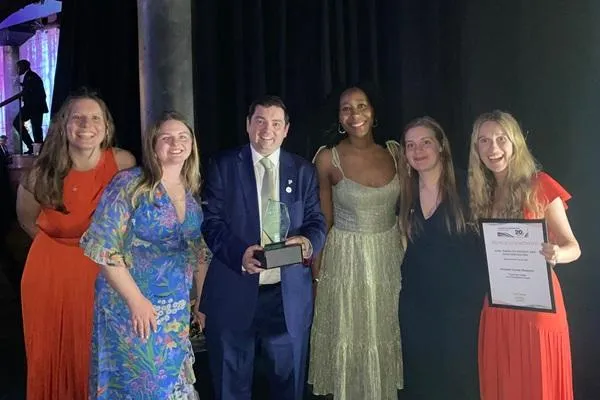
At the Insight in Fundraising Awards 2026, we were delighted to win the ‘Most Powerful Use of Insight to Improve Supporter Experience’ award. We also received a highly commended in the ‘Most Powerful Insight Using ML/AI’. This was for our work with the amazing team at Prostate Cancer Research. Thread Fundraising’s co-founder, Craig Linton describes the winning project.
Most fundraisers I speak to want better supporter insight. Too often that ends up being a profile dripped in demographics, but no real understanding of the underlying reasons for giving.
That is the story of the award-winning project we worked on with the fabulous team at Prostate Cancer Research. The AI agents we built are the part people notice. But they only work because of the survey and insight work that came before them.
Here is what we did and what other charities can take from it.
The pressure for change
Following their national prostate cancer screening campaign, Prostate Cancer Research gained over 100,000 new supporters in a short space of time. The email audience grew from around 25,000 to more than 150,000 in a single year.
That is a good problem. It is also a dangerous one. A one-size-fits-all approach stops working at that scale. New supporters came in through the campaign, but we did not know what would keep them engaged after the campaign ended. Without that understanding, we risked diluting relevance, losing trust, and missing the window to build long-term relationships.
We needed to understand who these supporters really were. Not just what they did, but what they believed and why they cared.
Why we didn't just run a survey
Plenty of charities commission insight work. Most of it ends up as a slide deck that gets shown once and forgotten. We wanted something different.
The approach had three layers:
A large-scale survey that went far beyond behaviour. We used paired questions and cross-tabulation to test whether how people described themselves (their identity and values) matched the choices they actually made. That validation step is what stopped the personas being guesswork.
Around 40 in-depth supporter interviews with people from fundraising, marketing, services, and policy teams involved in the listening. This is important as it meant the insight was owned across the charity, not just parked with one team.
Sentiment analysis and thematic coding on the interview transcripts, so patterns came from evidence rather than gut feel.
We deliberately chose not to build a huge segmentation model. We did not want one perfect persona. We wanted five useful ones.
The insight that changed the most
The most powerful finding was a tension we had not fully seen before. Commercial sensitivities mean we can’t share too much detail, but it gave us a tangible way to segment supporters and create tailored copy and journeys.
We found the language supporter groups used was different depending on their underlying personality and values. For example, supporters who saw themselves as compassionate leaned on words like caring, family, supportive, and empathetic. Action-oriented supporters used words like positive, determined, fighter, and fundraiser.
This is the key thing you need to ask about your supporters: what are the competing motivations in my audience, and am I writing to all of them or just the loudest one?
Turning personas into AI agents
We translated the five personas into AI agents inside Microsoft Copilot. Each agent was trained on the research, aggregate data (no personal /identifiable info was shared), and the language patterns we had found. The team can now chat with a supporter persona while writing an appeal, planning a journey, or shaping campaign copy.
It is not a replacement for supporter research. It is a way of keeping the research alive in the room when decisions get made. Someone drafting a welcome email can ask a persona how they would feel reading it. Someone planning a campaign can test whether the framing lands with both science-led and action-led supporters. The insight stops being a report and becomes a colleague.
What changed
What impact has the work had:
The Big Give appeal doubled income year on year — a team-wide success with many contributing factors. The insight helped shape a sharper comms and email strategy that played its part.
Summer appeal income grew, and response rates held steady across a five-email series instead of declining. This is because each email was designed to appeal to different identities and personas.
We used the insight to sharpen our telephone scripts drove, which have consistently exceeded sector averages for conversion.
Internally, the shift was just as real. Teams now share a common language for talking about supporters. Copy gets drafted with a specific persona in mind. Journeys have new logic behind them.
We’ve partnered with Craig and the Thread team for nearly three years – a period where we’ve more than tripled individual giving income.
This is another successful project and we are delighted to have won the award.
The project has really helped us understand our audiences and get clarity on the messaging, which in turn has helped us improve our individual giving results and develop products and campaigns based on the insight generated.
The agents have also helped us tailor content and try to help us put ourselves in our supporters' shoes.
Ellen Whatmore, Director of Public Fundraising, Prostate Cancer Research
"The judges liked that the work was based on solid research and appreciated how well they understood supporter motivations. They started with internal hypotheses, then tested them rigorously through a large-scale, multi-layered survey designed to explore identity, personality, values and worldview and not just behaviours. They recognised an opportunity and worked methodologically to deliver in-depth insight and innovation, developing measurable improvements in experience and showing clear cause and effect."
Want to do this in your charity?
Interested in applying the same techniques and rigour to your own supporter insight? Get in touch to see how Craig and the Thread Fundraising team can help.